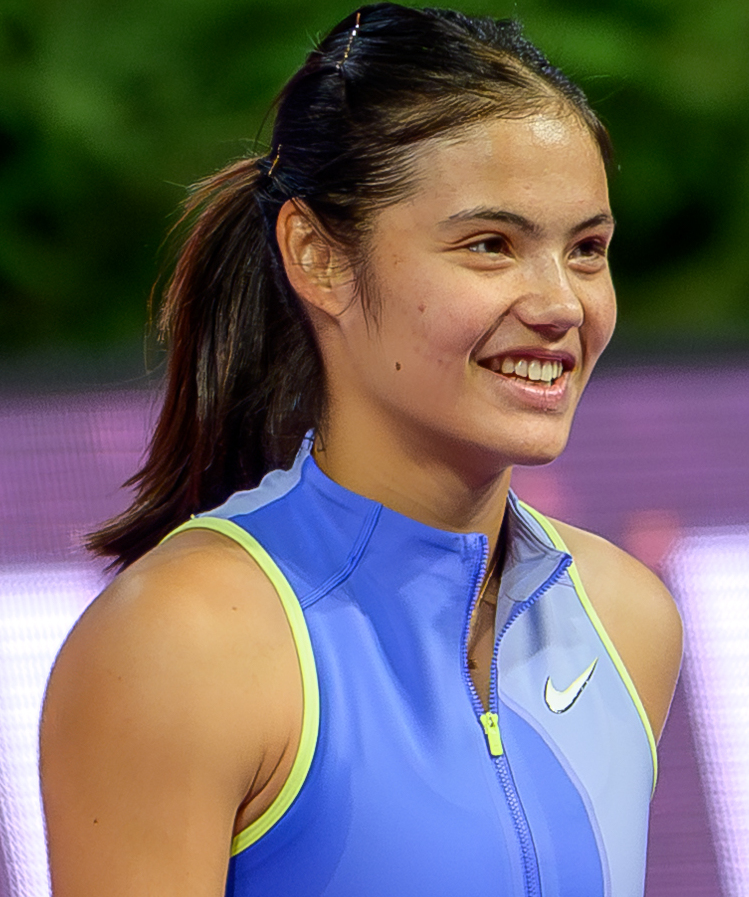
Emma Raducanu's Reboot: Mixing Old & New Coaching for Her Game
The name Emma Raducanu still evokes vivid memories of her breathtaking charge to the 2021 US Open title. As an unseeded qualifier, she captured the hearts of millions with a brand of fearless, aggressive tennis that seemed unstoppable. Fast forward to today, and Raducanu finds herself in the midst of a significant "reboot," particularly concerning her Emma Raducanu's Coaching Search: Reclaiming Her US Open Style. This isn't just about tweaking her serve or forehand; it's a deep dive into rediscovering her innate playing style and redefining her approach to professional guidance.
Arriving at prestigious tournaments like the BNP Paribas Open at Indian Wells, Raducanu's focus is clear: to return to that free-hitting, instinctive game that propelled her to superstardom. As she candidly revealed, "At the start of the year, I wasn’t feeling too good about my game, and I was playing in a way I didn’t necessarily enjoy. I wanted to get back into being more aggressive." This desire for aggression and enjoyment lies at the heart of her current strategic overhaul, influencing every decision around her evolving raducanu coaching style.
The Genesis of a Champion: Recalling the 2021 US Open Style
To understand Emma Raducanu's current quest, it's crucial to revisit the magic of 2021. As an 18-year-old, she played with an exhilarating blend of power, precision, and audacious shot-making. Her game was characterized by an aggressive forehand, a willingness to take the ball early, and an unwavering belief in her ability to hit winners from anywhere on the court. It was a style forged in the fires of freedom, unburdened by external expectations or the complexities of professional tennis.
However, the journey since that historic triumph has been challenging. Raducanu admitted to struggling with her game, particularly after the Australian Open, where she expressed frustration with an elongated forehand swing that felt unnatural. She yearned to revert to her "teenage playing style" – a description that speaks volumes about her desire to strip away perceived technical overhauls and reconnect with the simple, effective instincts that made her a champion. "Hitting the ball to the corners and hard" became her mantra, a direct contrast to playing in a way she didn't enjoy. The weight of being a Grand Slam champion at just 23 years old, coupled with the scrutiny that comes with it, has undeniably added layers of complexity to her pursuit of that initial "innocence" and free play.
Navigating the Coaching Carousel: The Search for the Right Fit
One of the most talked-about aspects of Emma Raducanu's career post-US Open has been her frequent coaching changes. Her partnership with Francisco Roig, a long-time coach of Rafael Nadal, concluded after the Australian Open, reportedly due to disagreements over her playing style. Roig was the seventh full-time coach Raducanu had worked with since her breakthrough, highlighting a discernible pattern in her search for the ideal guidance.
This dynamic has led her to a unique and adaptive raducanu coaching style for her current "reboot." At Indian Wells, she informally brought back former coach Mark Petchey. This move exemplifies her new strategy: a blend of trusted, familiar faces ("the old") and an openness to new perspectives ("the new"), but all filtered through her primary goal of rediscovering her natural game. The challenge for any top athlete, especially one who reached the pinnacle so quickly, is finding a coach who can enhance their innate abilities without trying to fundamentally change them. The tennis world is rife with examples of successful player-coach relationships built on mutual respect and a shared vision, but finding that specific synergy can be a lengthy process. It's not merely about technical advice; it's about chemistry, communication, and a deep understanding of the player's psychology and ambition. For Raducanu, this means seeking guidance that complements, rather than dictates.
Prioritizing Instinct: Raducanu's Evolving Coaching Philosophy
Emma Raducanu's current approach to coaching can be distilled into a clear philosophy: prioritizing instinct over dictation. "Right now, it's more about bringing my instincts back out, getting back in touch with myself," she stated. This revelation offers a profound insight into her past experiences, suggesting that previous coaching setups might have, at times, led her away from her natural tendencies. "I have had a lot of people telling me what to do, how to play, and it hasn't necessarily f..." (implying 'fitted' or 'worked out for me').
This new Raducanu's Coaching Philosophy: Instinct Over Dictation means she remains open to a full-time coach, but with a crucial caveat: they must not dictate her playing style. For an elite athlete, instinct is often the culmination of thousands of hours of practice and competition, honed to make split-second decisions under immense pressure. A coach's role, in this framework, shifts from a prescriptive instructor to a facilitator and guide – someone who helps the player refine their existing toolkit, build confidence, and identify patterns without imposing an alien framework. It's about providing tactical insights, refining technique where necessary, and offering emotional support, but always allowing the player's unique talent and intuition to lead the way.
Practical Tips for Nurturing Instinct in Sport:
- Self-Reflection: Understand your natural strengths and preferences. What feels most comfortable and effective?
- Mindful Practice: Don't just drill; practice with intent, allowing for creative shot-making and problem-solving.
- Trusted Mentors: Seek coaches who listen, observe, and empower, rather than imposing a rigid system.
- Match Play Focus: Prioritize competitive scenarios where instinct is naturally engaged, rather than solely focusing on isolated drills.
- Journaling: Document what works and what doesn't in matches, paying attention to feelings and instinctive choices.
Challenges and the Road Ahead: Beyond the Coaching Equation
While the focus on her raducanu coaching style is paramount, it's essential to acknowledge the other significant hurdles Emma Raducanu has faced. A "series of long-term or persistent injuries" has severely disrupted her training and competitive rhythm since her US Open victory. Just recently, she played through the Qatar Open and Dubai Tennis Championships with an ongoing chest infection, leading to early exits and a candid admission that "In hindsight, I probably could have sat those ones out." Physical well-being is the bedrock of any tennis player's success, and these setbacks have undoubtedly hindered her ability to consistently implement any desired changes to her game.
Moreover, the mental burden of expectation is immense. From an unknown qualifier to a global superstar, Raducanu now carries the weight of a Grand Slam title and the intense scrutiny that accompanies it. This contrasts sharply with the "freedom" she experienced in 2021. As she rightly observes, "You definitely appreciate the innocence of just coming straight on and playing free, not knowing anything that comes with it. And I think that it maybe is harder as you get older to kind of do the same things." Her journey back to her aggressive best will require not only technical and tactical refinement but also immense mental fortitude and patience. She understands this is not an overnight fix: "it’s going to take a while because it’s been so many years of not necessarily doing that."
A New Chapter for Emma Raducanu
Emma Raducanu's "reboot" marks a crucial phase in her promising but challenging career. Her evolving raducanu coaching style, characterized by a selective mix of informal guidance from trusted figures like Mark Petchey and a clear philosophy of prioritizing instinct over dictation, signifies a mature and self-aware approach to her development. It's a testament to her determination to reconnect with the aggressive, free-hitting game that once conquered New York.
The path ahead will undoubtedly be arduous, fraught with the pressures of expectation, the demands of maintaining peak physical health, and the inherent difficulties of recapturing a style forged in different circumstances. However, by embracing her natural instincts and carefully curating her support system, Emma Raducanu is laying the groundwork for a new, resilient chapter on the WTA Tour. Her journey is not just about wins and losses; it's about a young champion forging her identity, on her own terms, in the demanding world of professional tennis.